Loading...
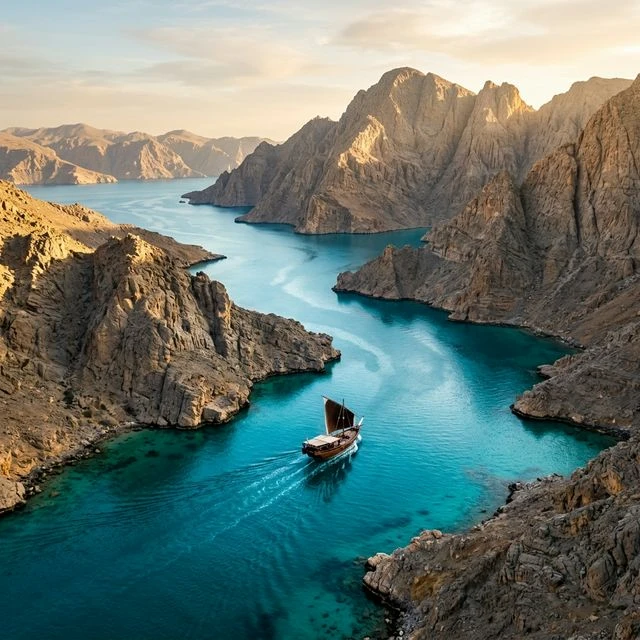
Musandam, OmanThe Fjords
The Fjords
of Arabia.
Quiet water, steep limestone cliffs, wild dolphins, and not a skyscraper in sight. This is the part of the Arabian Peninsula most visitors never see.
LocationNorthern Oman (Khasab)
Best SeasonOctober — April
Top ExperienceTraditional Dhow Cruise
Ideal Duration1 Day to Weekend
What Musandam Is Actually Like
Imagine a coastline where mountains drop straight into the water, no roads, no buildings — just rock, sea, and sky. You're on a wooden dhow, the engine is quiet, and the only sound is water against the hull. That's Musandam. It's not a theme park or a resort. It's a place that hasn't been built up, and that's exactly why people come.
The Opposite
of Dubai.
Crossing the border from the UAE into Musandam is one of the most noticeable shifts you'll experience in this region. The traffic disappears. The noise stops. You won't find a traffic light in Khasab — because there's no traffic to control.
- No high-rises — just mountains and water
- No traffic lights — the town has roundabouts and that's it
- No rush hour — the busiest thing is the morning fish market
- No air conditioning needed from November to March — it's 25°C
- No noise — you can hear your own footsteps on the dock
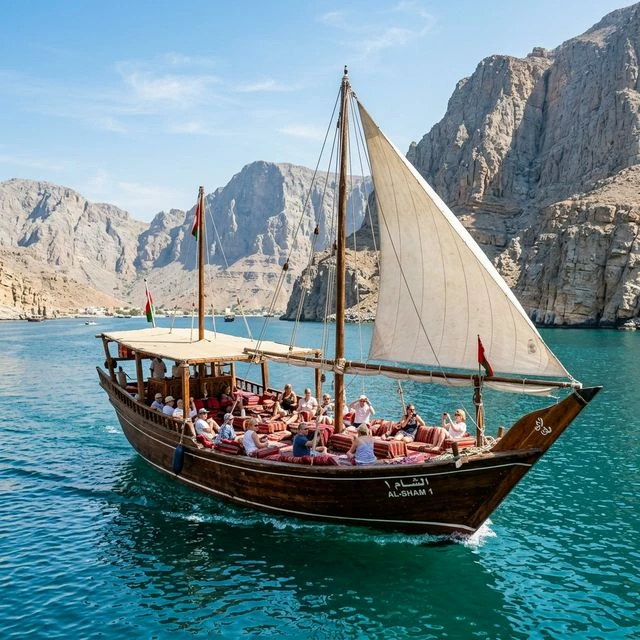
"Captain Ahmad always says: Musandam doesn't try to impress you. It just does."
What To Do
The Main Experiences
Musandam isn't a place with hundreds of attractions. It has a few things, and they're done well.
Dhow Cruises
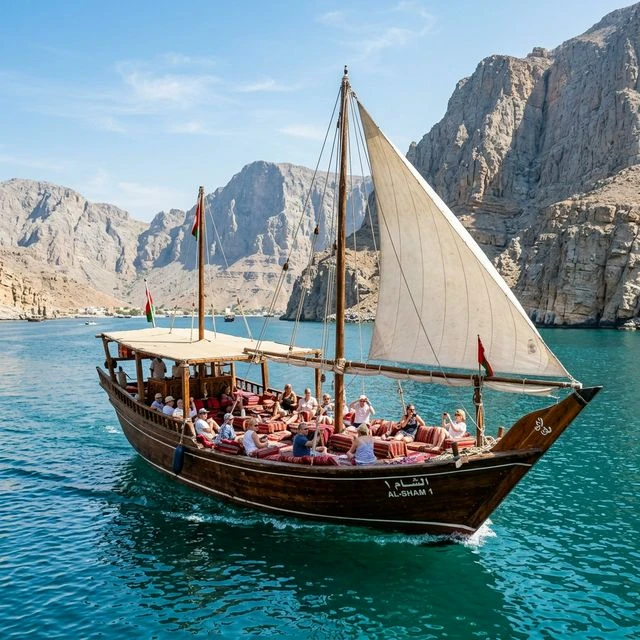
You board a traditional wooden dhow at Khasab Marina and sail into the fjords. The crew points out landmarks, stops for swimming, and serves lunch on the water. Most trips last 4-6 hours. The water is calm and clear — you can see the bottom at 10 meters.
Dolphin Watching
The Khasab fjords have resident dolphin pods. They swim alongside the dhow, jump out of the water, and sometimes play in the bow wake. It's not a staged encounter — these are wild animals doing what they do. We see them on about 9 out of 10 trips.
Mountain Safari to Jebel Harim
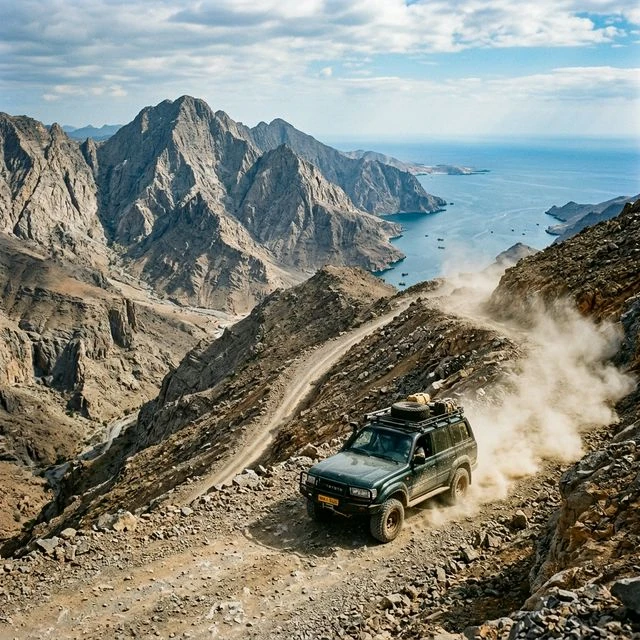
A 4x4 takes you from sea level to 2,000 meters. The road is rough — you'll hold onto the grab handle. At the top, you see ancient petroglyphs (rock carvings) and a view that goes all the way to Iran on a clear day. Bring a jacket — it's cooler up there.
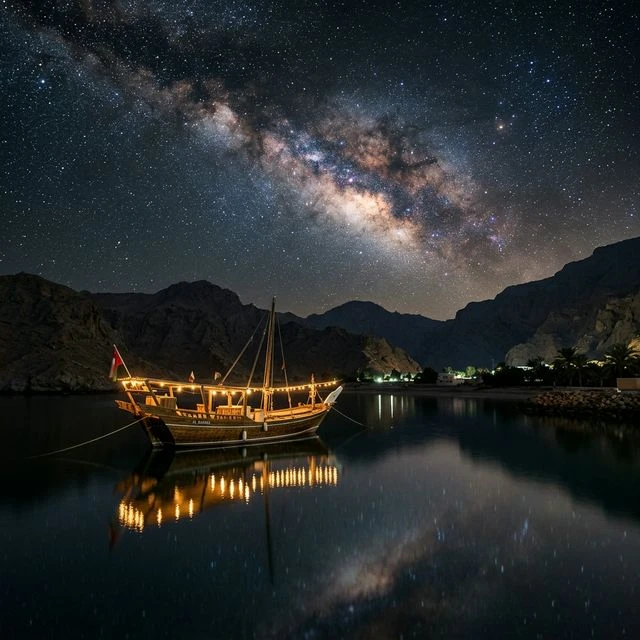
Overnight Beach Camping
We anchor at a remote beach, set up tents, and cook dinner over a fire. No lights, no sound except the waves. You fall asleep to the ocean and wake up to sunrise over the water. We provide bedding, food, and everything you need.
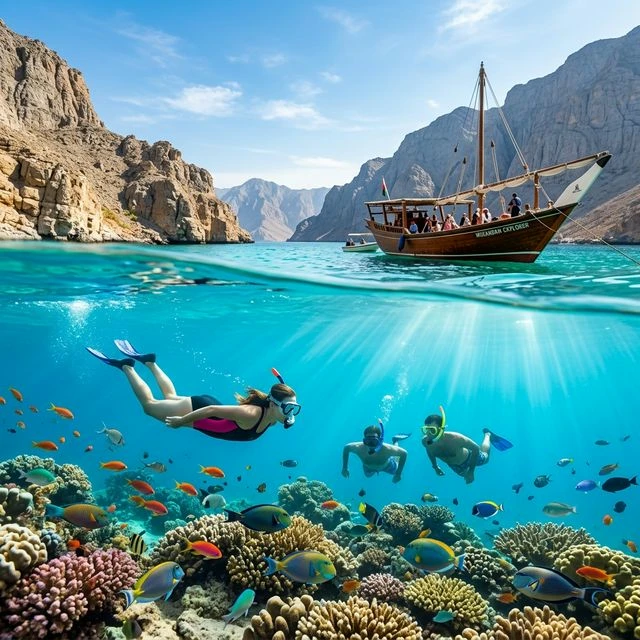
Snorkeling at Telegraph Island
A small island deep in the fjords that used to be a British telegraph station in the 1860s. The surrounding reef has coral, fish, and clear water. You can snorkel right off the dhow — no boat transfer needed. The ruins are visible from the water.
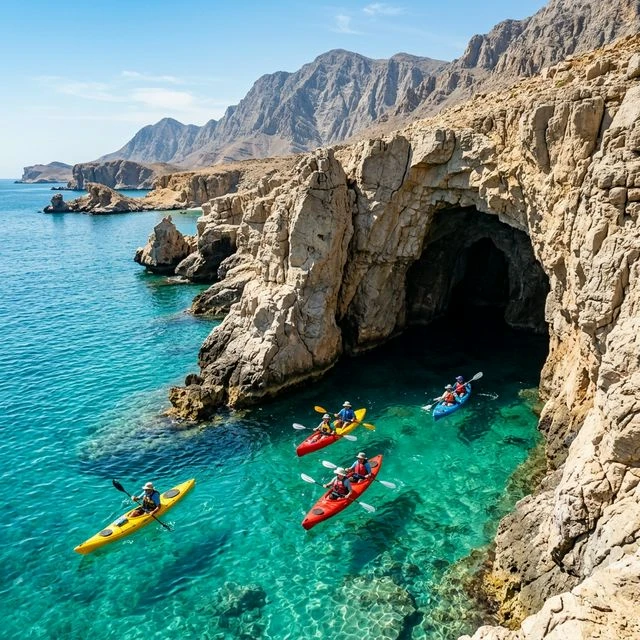
Coastal Kayaking (Dibba)
You paddle along the coast near Dibba, through sea caves and along limestone cliffs. The water is usually calm and clear enough to see fish below you. This is a quieter, more physical way to see the coastline compared to a dhow cruise.
"We leave the marina before the sun is fully up. The water is flat, the air is cool, and the crew has coffee ready. That first hour — before the wind picks up — is the best part of the day."
Where To Go
Explore All Places Key Destinations
Khasab
The Main Town
Small port town with a 17th-century Portuguese fort, a busy fish market, and the souq where you can buy dates, spices, and frankincense. This is where all fjord tours start.
Dibba
The Eastern Coast
The easternmost town in Musandam, closer to the open sea. Good for kayaking, diving, and access to sea caves. Quieter than Khasab.
Telegraph Island
The Historic Stop
A tiny island with ruins of a British telegraph relay station from 1864. The surrounding reef is popular for snorkeling. You can see the old stone buildings from the water.
Kumzar
Only by Boat
A village at the tip of the Musandam peninsula, completely cut off by mountains — no roads lead here. Residents speak Kumzari, a language that mixes Persian, Arabic, and Portuguese words.
Curated Experiences
Musandam's Finest Tours
Dhow cruises, mountain safaris, snorkeling — our most popular options, all with direct local pricing.

Best Seller
Easy
8 Hours
Full Day Dhow Cruise
4.9(214)
A full day on the water through Khasab's fjords — dolphins, snorkeling stops, and lunch on the dhow.
Traditional wooden dhow with 2,000+ year historyTwo snorkeling stops (45 min each)Chicken biryani, fruit, and Omani tea
From
AED 199/ person

Easy
4 Hours
Half Day Dhow Cruise
4.8(143)
See the Khasab fjords, spot dolphins, and get one snorkeling stop in 4 hours.
Traditional wooden dhowDolphin spotting in Khor Ash ShamWater and soft drinks
From
AED 99/ person

Adventure
Moderate
6 Hours
Jebel Harim Mountain Safari
4.8(89)
A 4x4 ride up Jebel Harim at 2,087m — fossil rocks, old villages, and views into Iran.
Jebel Harim summit — 2,087m elevationAir-conditioned 4x4 with experienced driver250-million-year-old fossil rocks
From
AED 249/ person

Premium
Easy
2 Days / 1 Night
An afternoon and night on the dhow — fjord cruising, BBQ dinner, sleeping under the stars, and sunrise breakfast.
Sleep on the deck under the starsBBQ dinner — grilled fish and chicken on deckSunrise breakfast in the fjord
From
AED 499/ person

Luxury
Easy
Flexible (4–24 hrs)
Private Dhow Charter
5(38)
Book the entire dhow for your group with a custom route, flexible timing, and your choice of catering.
Entire dhow for your group onlyCustom catering — pick your menuYour route, your schedule
From
AED 1,499/ person
Getting to Musandam
Practical details for crossing the border and getting to Khasab.
Visas & Borders
Most UAE residents and tourists get a visa at the Al Dara or Dibba border. Bring your original passport with at least 6 months validity. The process takes about 15-20 minutes.
Fee: Approx 50 AED / 5 OMR
Dubai to Khasab
Drive north through Ras Al Khaimah on the E11 to the Al Dara border. Total drive time from Dubai is about 3 hours. The coastal road is scenic — enjoy it.
Car Insurance Required for Oman
Weather & What to Wear
October to April is the sweet spot — 25°C, dry, sunny. Summer is hot and humid. Oman is conservative — dress modestly in town. On the dhow, wear whatever you're comfortable in.
Peak Season: Dec — Feb
Common Questions
Answers from our team. If you don't see your question here, message us on WhatsApp.
Is Musandam worth visiting?
Yes. If you like dramatic landscapes, calm water, and quiet places, you'll love it. If you're expecting luxury resorts and nightlife, this isn't the place. Musandam is raw, natural, and slow-paced — that's the whole point.
Why is Musandam called the Norway of Arabia?
The coastline has deep inlets and steep mountains that drop straight into the sea — it looks like Norwegian fjords. The comparison isn't perfect, but it stuck. The water here is warmer than Norway, though.
Do I need an Oman visa to visit Musandam from Dubai?
Yes, Musandam is part of Oman. Most UAE residents and tourists can get a visa at the Al Dara or Dibba border. Bring your original passport — no copies. The fee is around 50 AED or 5 OMR.
How long does it take from Dubai to Musandam?
Driving to Khasab takes about 3 to 3.5 hours, depending on traffic and border crossing time. Dibba is closer — about 2 hours. The drive along the coast through Ras Al Khaimah is genuinely beautiful.
What is the best time to visit the Musandam fjords?
October through April is ideal. The weather is cool and dry — perfect for being on the water. Summer (May to September) is hot and humid, and some tours run less frequently.
Can I see dolphins in Musandam?
Yes, almost every time. The Khasab fjords have resident pods of Indo-Pacific humpback and bottlenose dolphins. They're wild — you can't guarantee anything, but we see them on roughly 90% of our trips.
Is a 4x4 necessary for Musandam?
For dhow cruises, no — a standard car is fine to reach Khasab harbor. For mountain safaris to Jebel Harim, yes, absolutely. The roads are steep, unpaved, and not something you want to attempt in a sedan.
How do I travel between Khasab and Dibba?
There's no coastal road between them through the mountains. You can go by boat (about 2 hours along the coast) or drive through the UAE — which adds time and requires crossing two borders.
Is Musandam safe for families?
Yes. The inner fjords are calm water, locals are welcoming, and all tour operators follow maritime safety rules. We've had families with kids as young as 4 on our dhows.
